

Research
Published research
A pilot study of the Trauma Resiliency Protocol
Maguire et al. · Arizona State University
Journal of Occupational and Environmental Medicine (2024)
128 law enforcement officers
MISSION STATS
Study Group 1 — Trauma Resiliency Protocol–Performance Recovery
394 Heroes · 67 female / 327 male · Average age: 43.8 years · Average sessions: 1.9
Average scores
| Measure | Before | After |
|---|---|---|
| PTSD symptoms — PCL-5 | 46 | 6.98 |
| Anxiety — GAD-7 | 13.31 | 2.33 |
| Depression — PHQ-9 | 14.28 | 2.37 |
Score ranges: PCL-5, 0–80; GAD-7, 0–21; PHQ-9, 0–27. PTSD threshold: PCL-5 31–80. Anxiety thresholds: moderate 10–14; severe 15–21. Depression thresholds: moderate 10–14; moderate/severe 15–19; severe 20–27.
Mission Heroes breakdown
| Role | Participants |
|---|---|
| 911 Dispatchers | 10 |
| Law Enforcement Officers | 91 |
| Firefighter/EMS | 53 |
| Crime Scene | 1 |
Dual Law Enforcement / Veteran
| Role | Participants |
|---|---|
| Law Enforcement Officer and Army Veteran | 7 |
| Law Enforcement Officer and Air Force Veteran | 1 |
| Law Enforcement Officer and Marine Veteran | 5 |
Active duty
| Branch | Participants |
|---|---|
| USAF Active Duty | 2 |
| USCG Active Duty | 1 |
Civilian breakdown
| Role | Participants |
|---|---|
| Law Enforcement Officer Family | 9 |
| Firefighter Family | 5 |
| Veteran Family | 29 |
| Civilians | 38 |
| Gold Star Families | 3 |
Study Group 2 — Trauma Resiliency Protocol–Performance Recovery
490 Heroes · 157 female / 333 male · Average age: 46.0 years
Each result reflects 1–5 doses of the Trauma Resiliency Protocol between the intake and post scores.
Average scores
| Measure | Before | After |
|---|---|---|
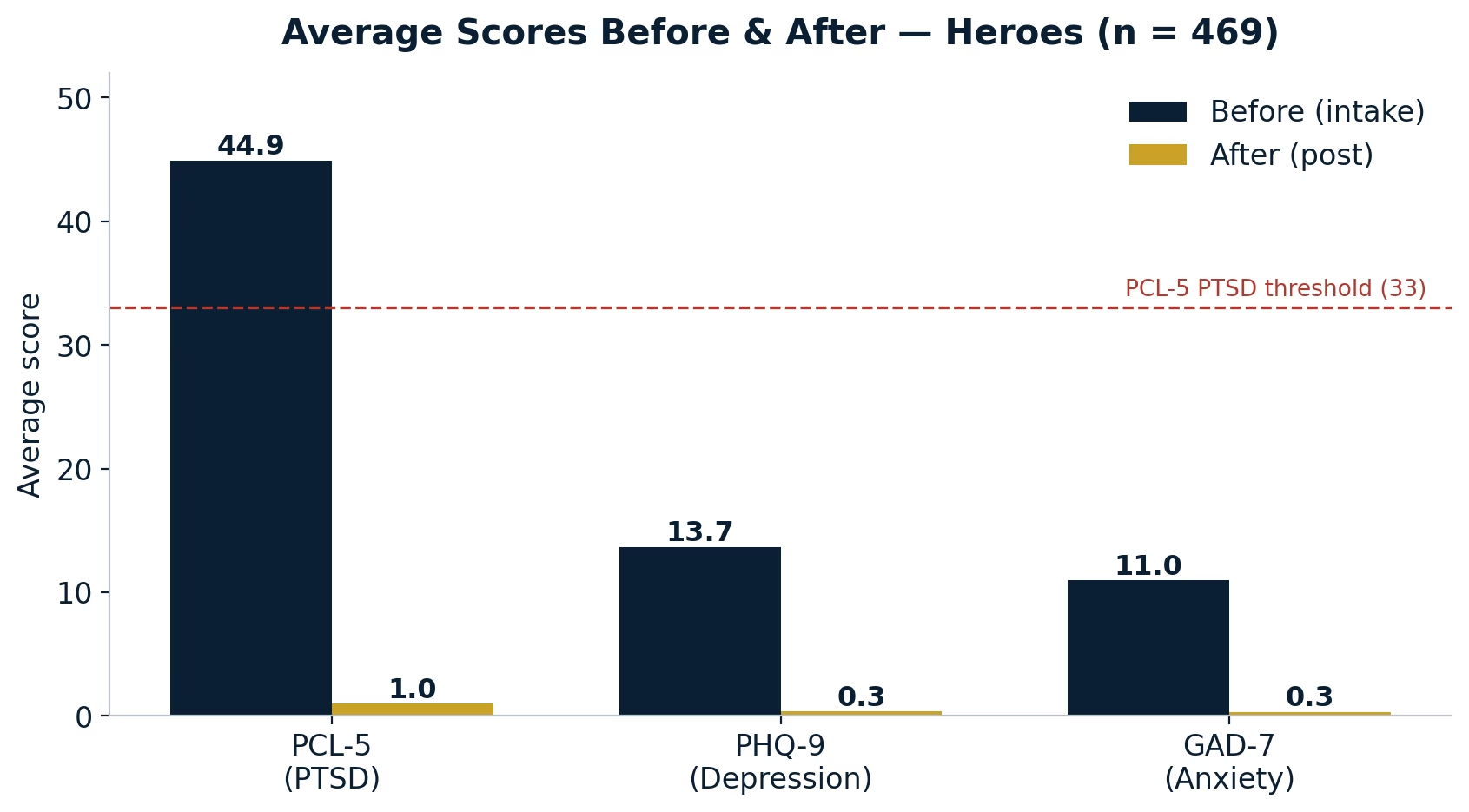
| PTSD symptoms — PCL-5 | 44.7 | 0.9 |
| Anxiety — GAD-7 | 11.0 | 0.3 |
| Depression — PHQ-9 | 13.6 | 0.3 |
Score ranges: PCL-5, 0–80; GAD-7, 0–21; PHQ-9, 0–27. PTSD threshold: PCL-5 31–80. Anxiety thresholds: moderate 10–14; severe 15–21. Depression thresholds: moderate 10–14; moderate/severe 15–19; severe 20–27.
Key outcomes
490 of 490 clients improved (100%) — not one client got worse.
379 clients started in the PTSD range — all 379 finished below it.
Question 9
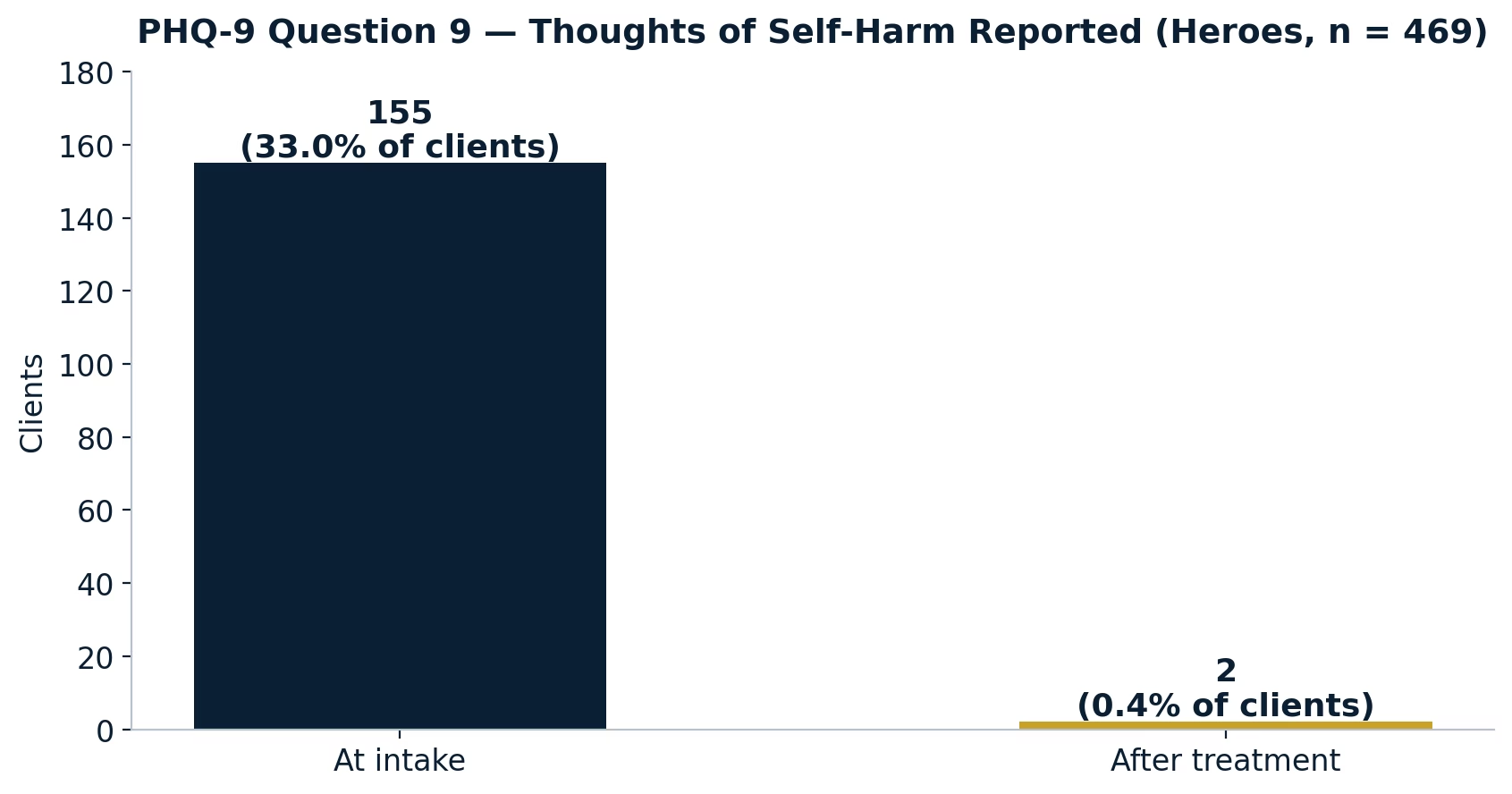
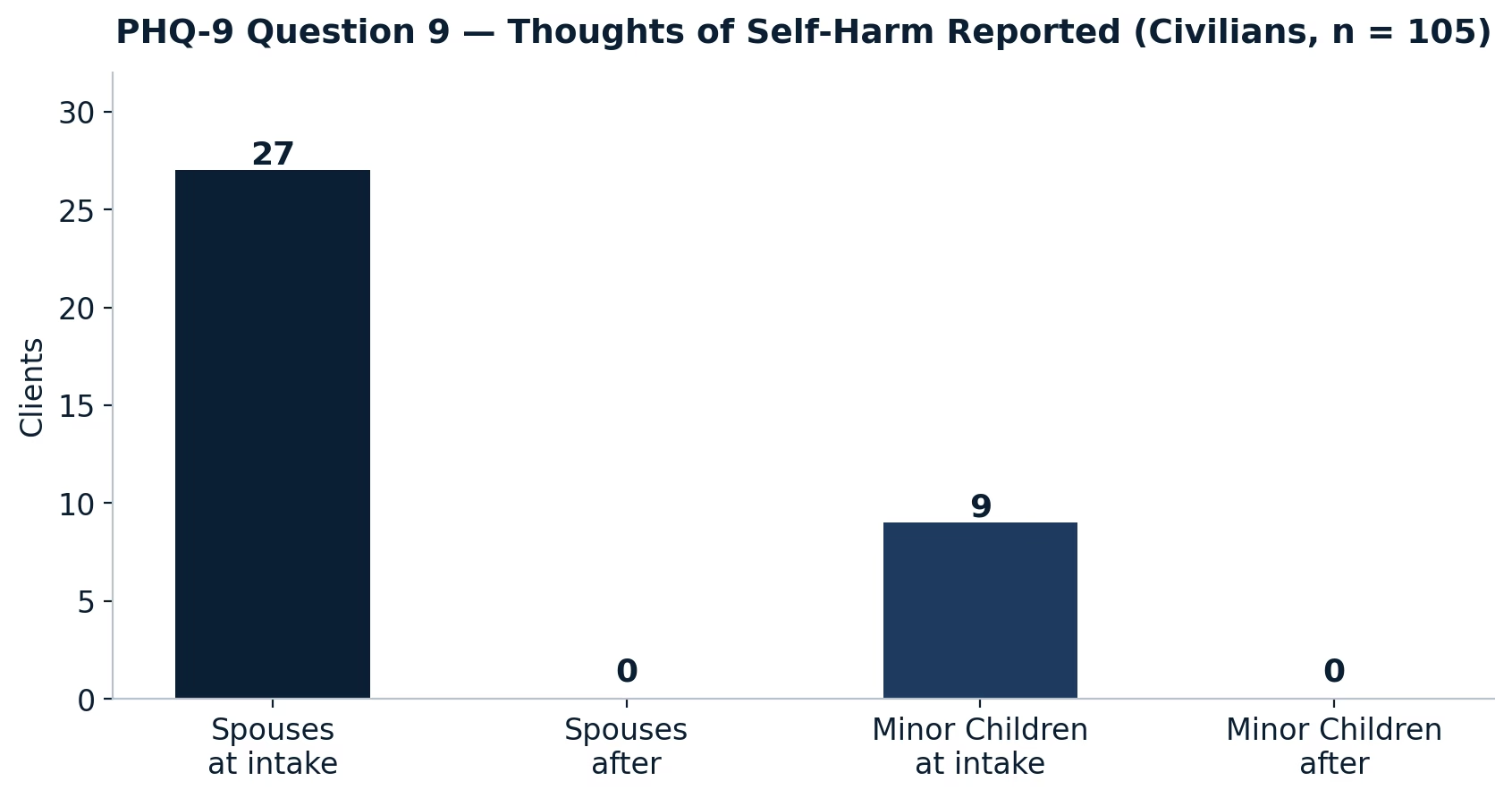
Question 9 (thoughts of being better off dead, or of hurting yourself): 164 clients reported them at intake — after treatment: 2.
Study Group 3 — Trauma Resiliency Protocol–Performance Recovery
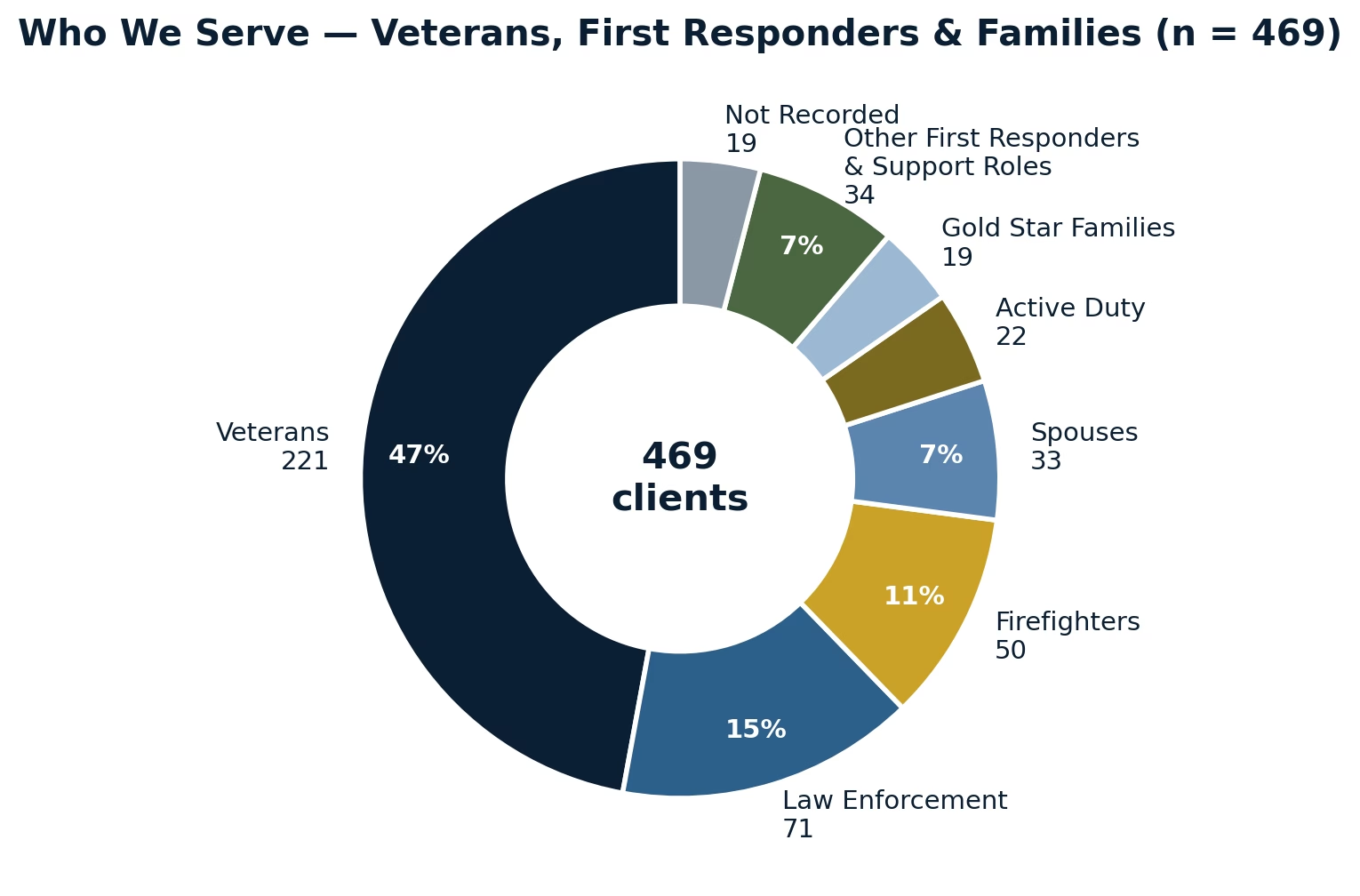
469 participants
Who we served
| Primary role | Participants |
|---|---|
| Veterans | 221 |
| Law Enforcement | 71 |
| Firefighters | 50 |
| Spouses | 33 |
| Active Duty | 22 |
| Gold Star Families | 19 |
| Other First Responders & Support Roles | 34 |
| Not Recorded | 19 |
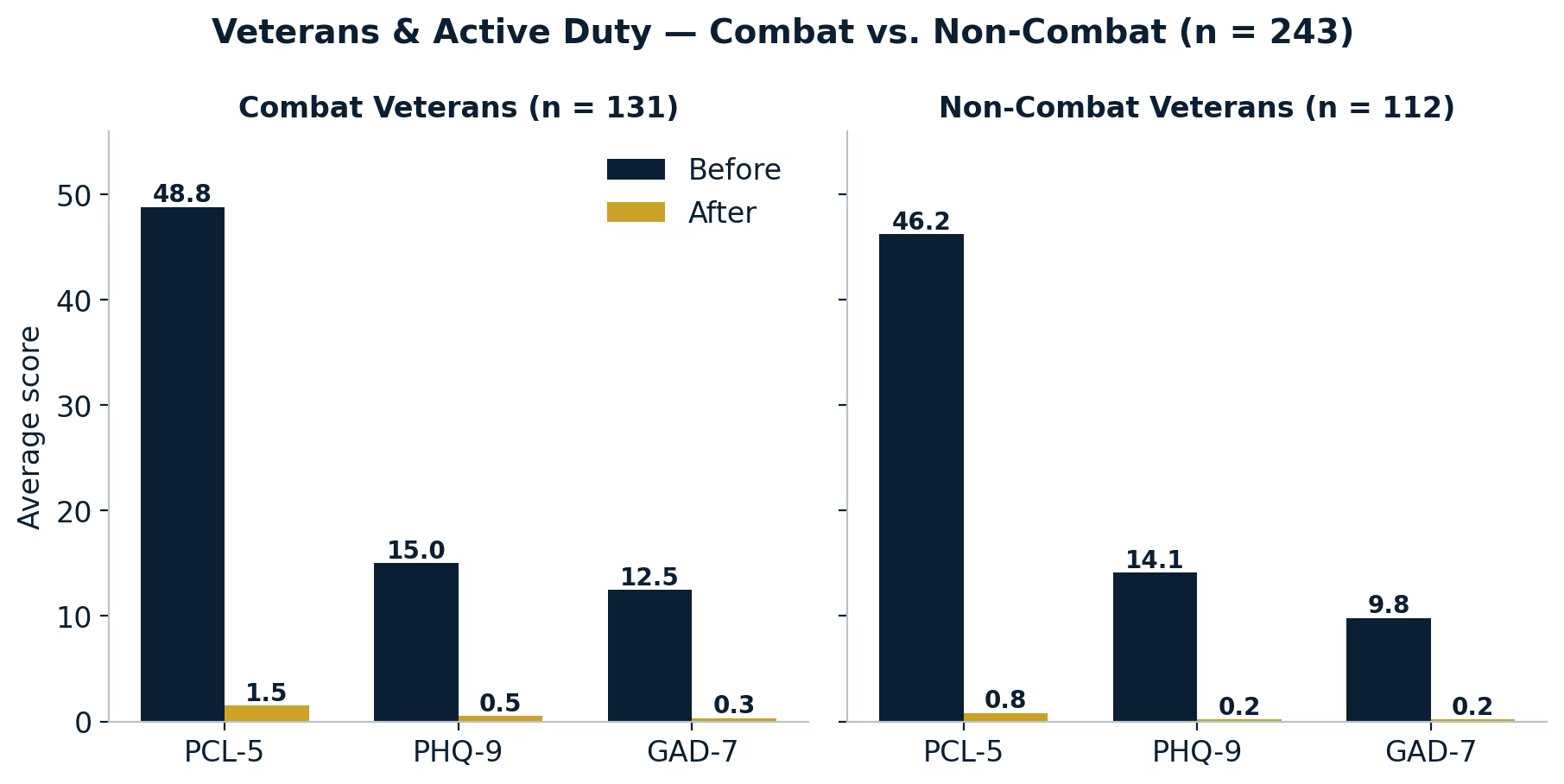
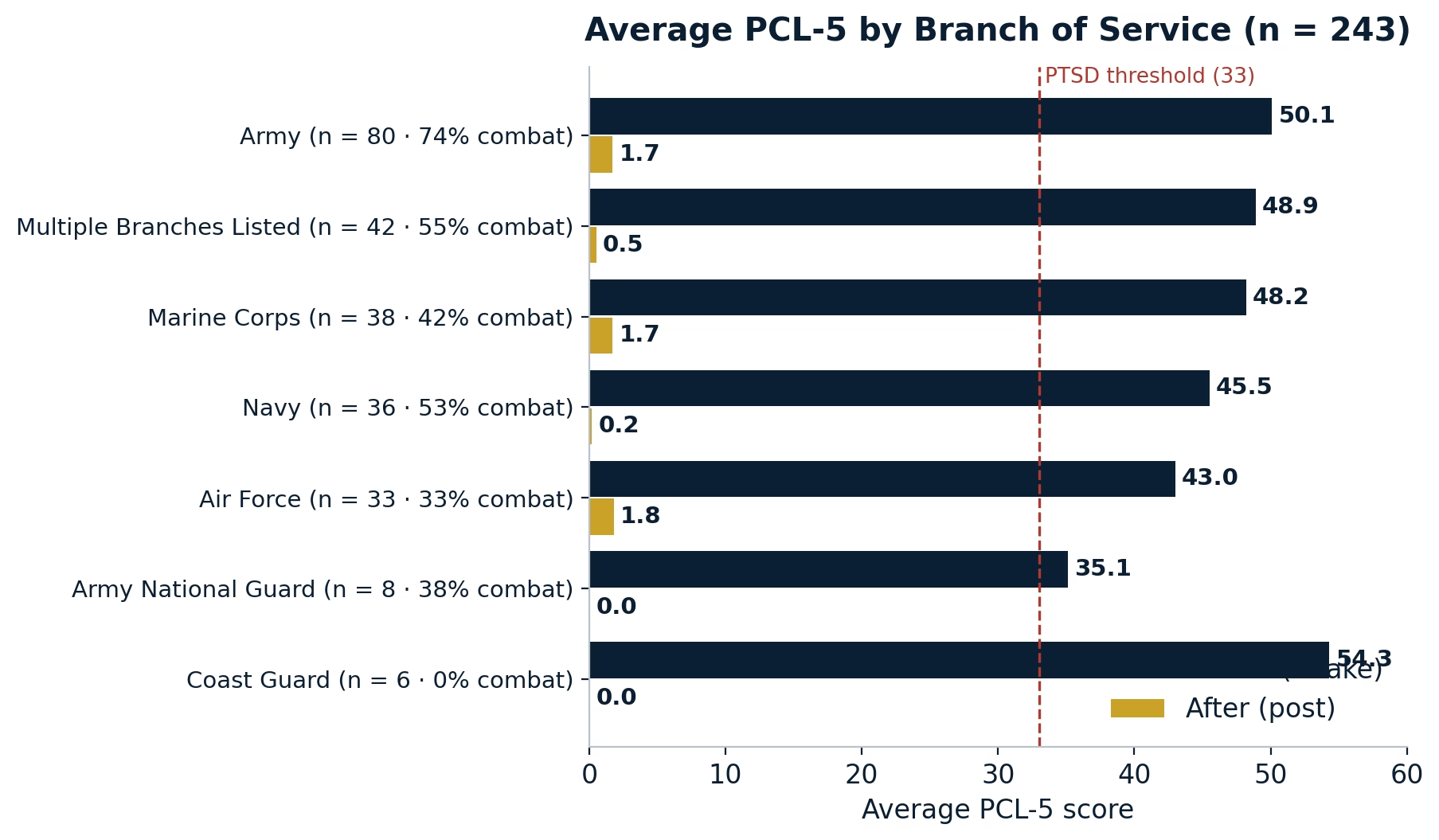
Of the 243 veterans and active-duty clients: 131 combat veterans and 112 non-combat veterans.
By branch
| Branch | Participants |
|---|---|
| Army | 80 |
| Marine Corps | 38 |
| Navy | 36 |
| Air Force | 33 |
| Army National Guard | 8 |
| Coast Guard | 6 |
| Multiple Branches | 42 |
Study Group 4 — Civilians: Spouses & Minor Children
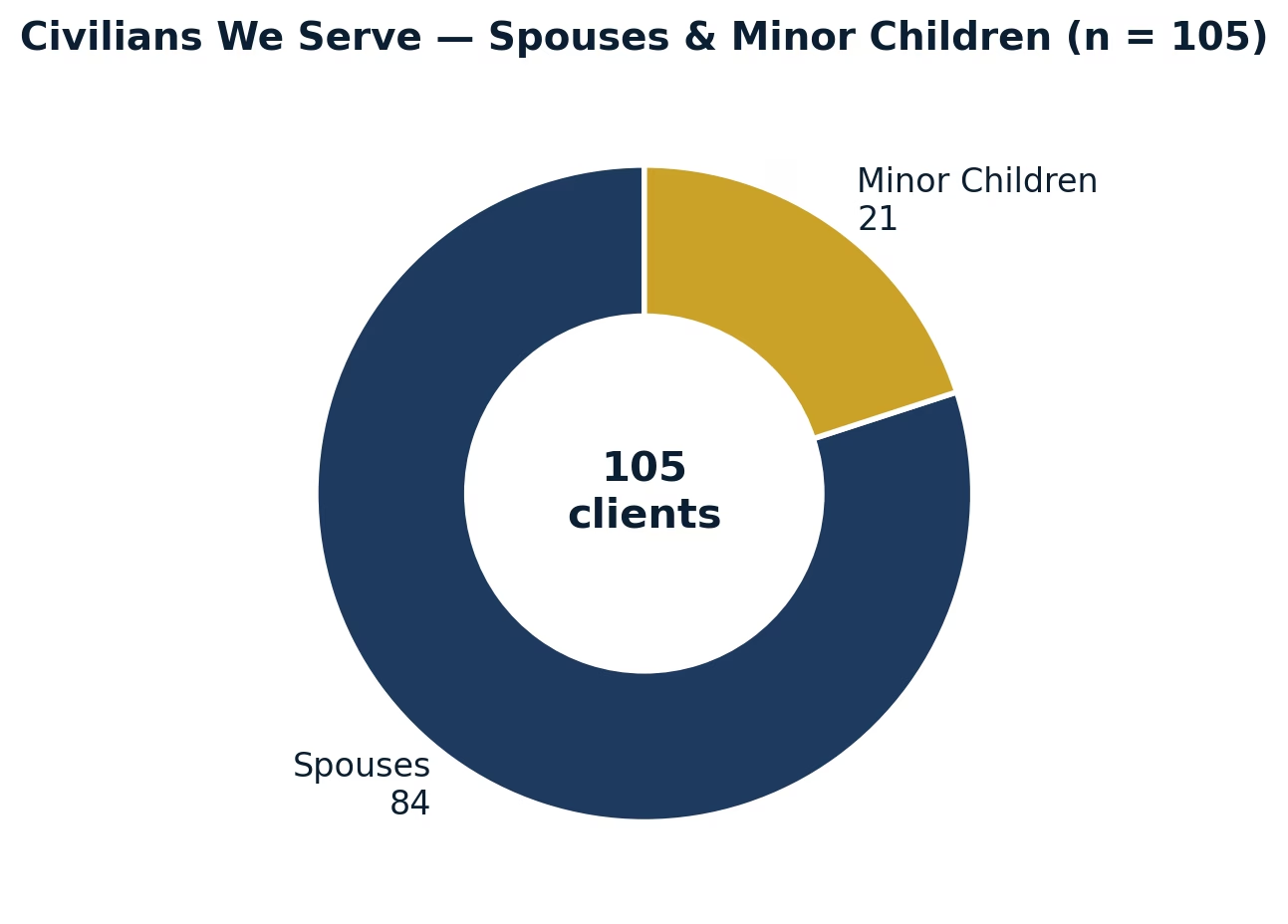
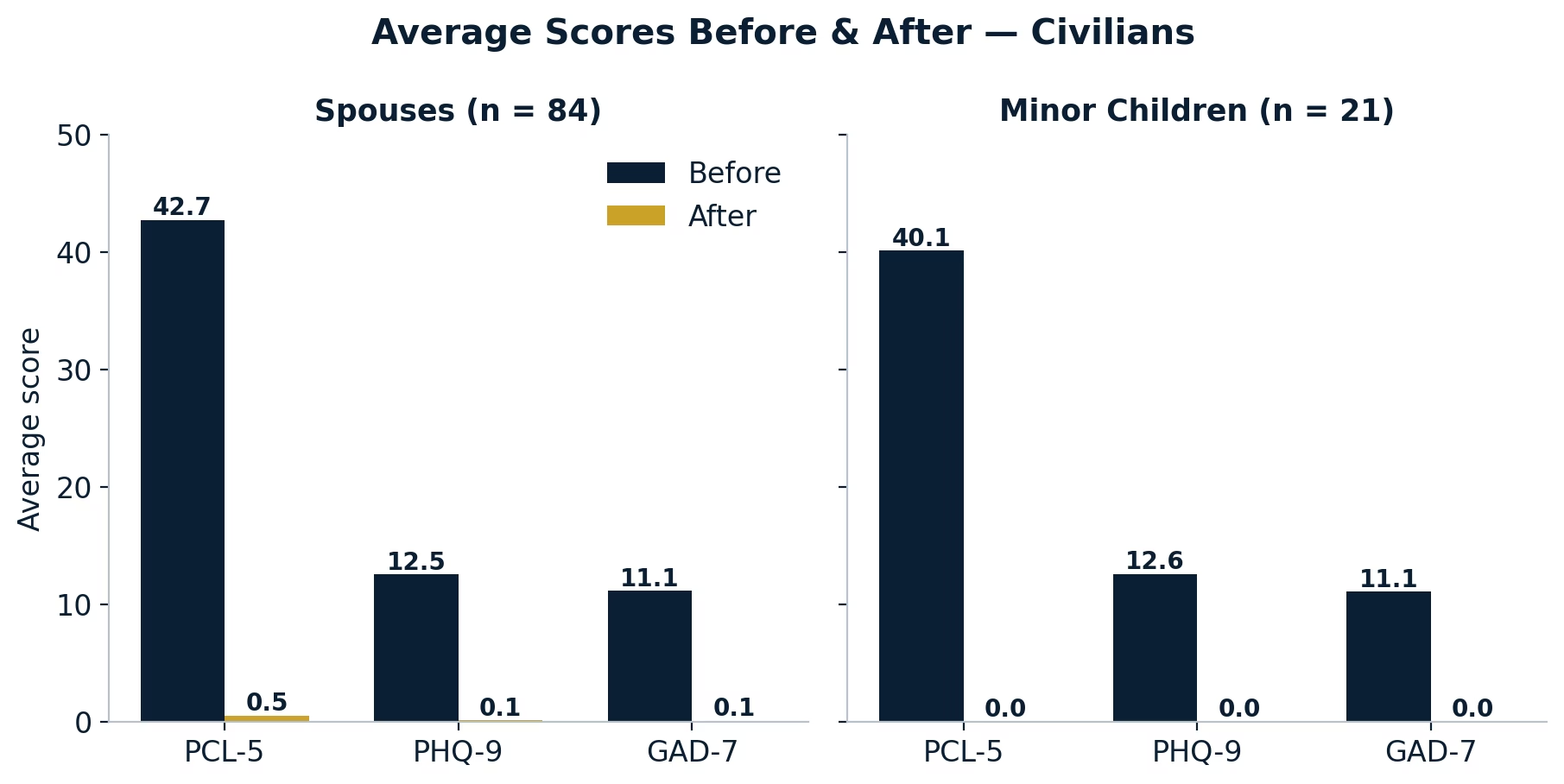
105 participants: 84 spouses and 21 minor children
| Participants | Count | PCL-5 before | PCL-5 after |
|---|---|---|---|
| Spouses | 84 | 42.7 | 0.5 |
| Minor children | 21 | 40.1 | 0.0 |
Spouses are also counted in the Who We Serve list above by their own primary role; the unique total across both groups is 490 clients.
Study Group 5 — ASU qEEG Study
105 participants (61 veterans); 89 with paired pre/post scores
Average scores
| Measure | Before | After |
|---|---|---|
| PTSD symptoms — PCL-5 | 46.9 | 0.8 |
| Anxiety — GAD-7 | 12.8 | 0.4 |
| Depression — PHQ-9 | 14.3 | 0.4 |
89 of 89 improved; 82 left the PTSD range (PCL-5 of 31 or higher).
Long-term follow-up
Scores measured months later (about 11 months after post, on average), for those who have them.
| Follow-up | PCL-5 | PHQ-9 | GAD-7 |
|---|---|---|---|
| Longevity form (n = 56) | 0.1 | 0.0 | 0.0 |
Longevity form: gains held.