

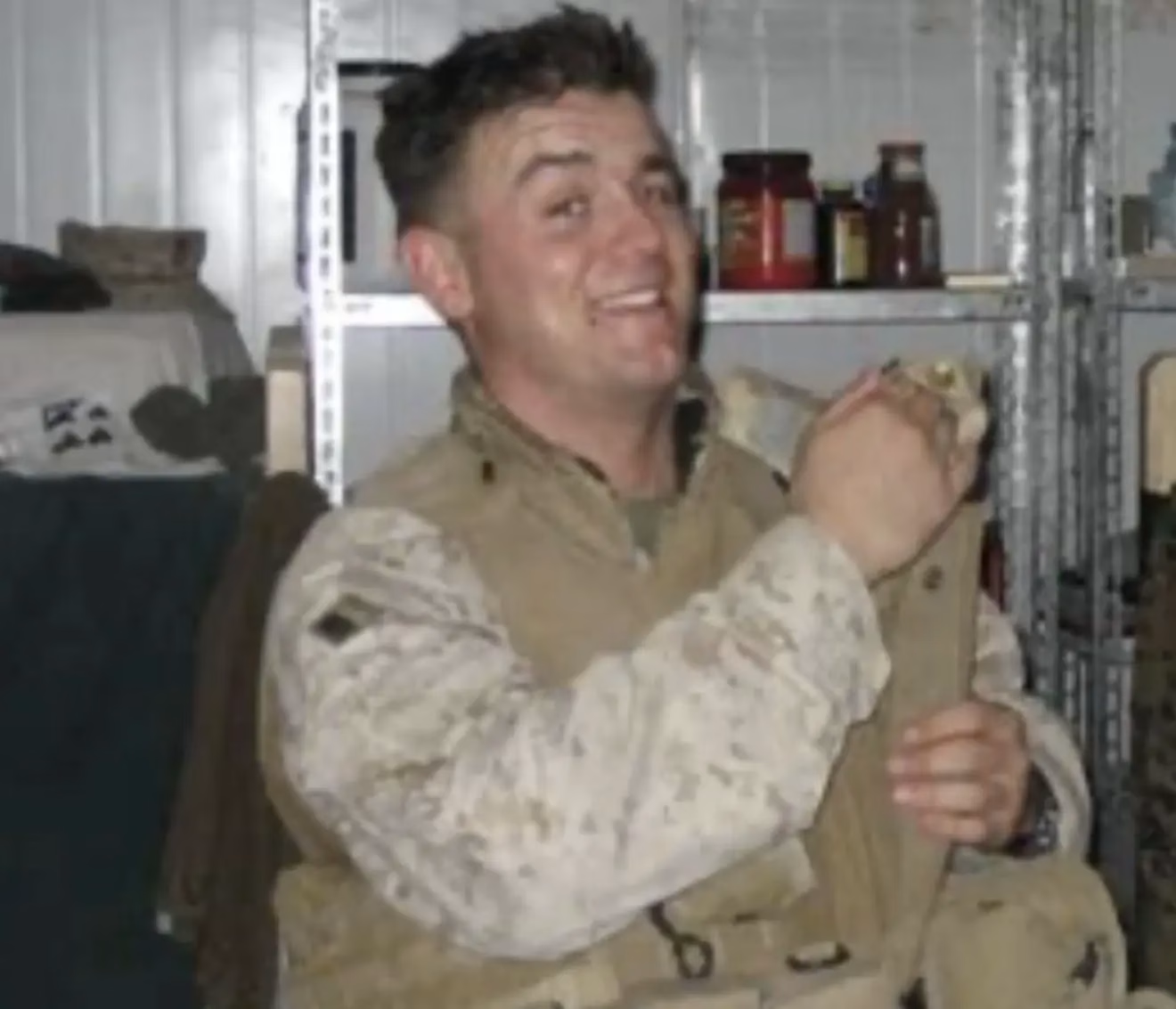
USMC
Chad made his decision early.
As a senior in high school, with a full life ahead of him, he chose the harder road—raising his right hand to serve in the United States Marine Corps. He did it for something bigger than himself. He once said, “Maybe if I go now, my children won’t have to.”
That was Chad.
Selfless. Driven. All in.
At just 17, he left for boot camp in California. After earning the title Marine, he was deployed to Iraq—into the Sunni Triangle during one of the most dangerous periods of the war. He later described it as “the scariest place on earth.” In seven months, he lost brothers. He saw things no young man should ever have to carry.
And he brought it all home with him.
When Chad returned stateside in 2006, the weight of war began to show. The nightmares. The sleepless nights. The internal fight he couldn’t shut off. He did what we ask our warriors to do—he reached out for help.
But instead of being met with understanding, he was often met with resistance, delay, or dismissal. Even when medical professionals documented severe PTSD and recommended in-patient treatment, those recommendations were overridden—and Chad was sent back into the fight.
After his second tour, the symptoms intensified. Nightmares turned into hallucinations. Sleep became nearly impossible. His behavior grew more erratic—not because he was broken, but because he was carrying more than any one person should.
He kept asking for help.
What followed was a cycle too many know all too well—appointments, prescriptions, waiting lists, and systems that moved too slowly for a warrior in crisis. At one point, while trying to open up about combat, he was told he could only talk about Iraq on certain days. Meanwhile, medications increased. The burden did not lift.
Chad was waiting for a bed at a specialized PTSD facility.
It came one week too late.
On May 17, 2008—just two months before completing his service—Chad died. He had plans. A home. A fiancée. A future he was building.
At Healing the Hero, we say this with conviction:
Chad was not broken. He was injured. And injuries can heal—when the right care is delivered at the right time.
His story is not just one of loss—it is a call to action.
Because too many warriors return home carrying invisible wounds… and then find themselves fighting a second battle alone. Chad did everything right. He served. He led. He asked for help.
We honor Chad by ensuring the next warrior doesn’t have to wait.
We honor him by showing up faster, standing closer, and delivering real solutions that work.
We honor him by refusing to accept a system where help comes too late.
Chad lived by a simple directive:
“Get going or get out of the way.”
So that’s what we’re doing.
We carry his legacy forward—on mission.
See All Memorials ->