Active-Duty Navy EOD Technician
Focus Keyphrase:
Neurocognitive restoration Navy EOD
Secondary Keywords:
human performance optimization, qEEG brain scan results, HRV performance, military cognitive performance, trauma recovery brain function, ERP P300 improvement
Table of Contents
What Happens to the Brain Under Extreme Operational Stress?
The Role of Navy EOD in Neurocognitive Restoration
The Importance of Navy EOD in High-Stress Situations
Naval Special Warfare (NSW) Explosive Ordnance Disposal (EOD) technicians operate in one of the most cognitively demanding environments on the planet.
Every decision matters. Every second counts.
But what most people don’t see is what happens inside the brain after repeated exposure to high-stress missions:
- Slower reaction times
- Reduced memory performance
- Decreased attention and focus
- Increased cognitive load and fatigue
Now the real question:
👉 Can the brain fully recover—and even optimize—after that level of stress?
This case study says yes.
The Case Study: Active-Duty Navy EOD Technician (Age 27)
This longitudinal performance study—aligned with Arizona State University research standards—tracked an active-duty Navy EOD technician across three time points using:
- qEEG brain scans (Evoke Neuroscience) Multidimensional Trauma Study with Vietnam Veteran & Retired Firefighter
- ERP (Event-Related Potentials)
- Heart Rate Variability (HRV)
- Cognitive performance testing
- Validated stress-performance scales (PCL-5, PHQ-9, GAD-7)
Baseline: When Performance is Compromised
At the first scan, the operator showed clear signs of reduced cognitive efficiency:
- Global Brain Performance Score: 39%
1st scan- NSW EOD Operator
- Slowed response speed (571 ms)
- High error rates and inconsistency
- Delayed attentional processing (P300 latency: 484 ms)
- Symptoms reported: brain fog, memory issues, insomnia
What This Means
At 39%, the brain is operating below optimal performance thresholds—not ideal for someone in a high-risk role like EOD.
After Just Two Sessions: Rapid Performance Gains
Within 11 days, after two performance-focused interventions:
- Global Score jumped to 57%
2nd scan-NSW EOD Operator
- Omission errors dropped to 0%
- Reaction time improved dramatically
- Memory and executive function increased
Key Insight
The brain doesn’t need years to improve.
It can shift quickly when the right inputs are applied.
Final Outcome: Full Neurocognitive Restoration
At the third scan:
- Global Brain Performance Score: 84%
3rd Scan-NSW EOD Operator
- Memory, attention, and executive function all above normal thresholds
- Near-perfect accuracy in decision-making
- High cognitive consistency and stability
This Is What Peak Performance Looks Like
The operator didn’t just recover.
He optimized.
Brain Processing Speed & Decision Accuracy (Why This Matters in Combat)
Before vs After
| Metric | Baseline | 2nd Scan 2 Sessions TRP | Final Scan 3 Sessions TRP |
|---|---|---|---|
| Reaction Speed | 571 ms | 504 ms | 539 ms |
| Error Rate | Elevated | Near Zero | Near Zero |
| Consistency | Poor | Optimized | Optimized |
Translation to Real-World Performance
- Faster threat recognition
- Better decision-making under pressure
- Reduced cognitive fatigue
ERP Brainwave Data: Faster Thinking, Sharper Focus
ERP (Event-Related Potentials) measure how fast the brain processes information.
Attention Speed (P300a)
- Baseline: 484 ms (slow)
1st scan- NSW EOD Operator
- Final: 360 ms (optimized)
3rd Scan-NSW EOD Operator
What Changed?
- Faster processing of incoming information
- Increased attention control
- Stronger neural efficiency
👉 In simple terms: the brain got faster and more precise
HRV and Autonomic Performance: The Stress System Recalibrated
Heart Rate Variability (HRV) reflects how well the body handles stress.
Key Findings
- Balanced autonomic function across all scans
- More efficient energy use over time
- Improved stress-response control
👉 High performers don’t just have high output—they have efficient output
Psychological Load: From High Stress to Zero
This is where it gets even more interesting.
Performance Stress Scores
| Measure | Baseline | Follow Up 2-sessions TRP | Final 3 sessions TRP |
|---|---|---|---|
| 6/20/2025 | 7/26/2025 | 10/20/2025 | |
| PCL-5 | 60 | 30 | 0 |
| PHQ-9 | 11 | 4 | 0 |
| GAD-7 | 9 | 5 | 0 |
What This Means
- No residual emotional load
- No cognitive interference from past stress
- Full mental clarity restored
What Stands Out Most in This Study
This wasn’t gradual improvement.
This was accelerated restoration across every system:
✔ Cognitive Performance Increased 115%+
✔ Brain Processing Speed Normalized
✔ Decision Accuracy Optimized
✔ Emotional Load Eliminated
✔ Autonomic Efficiency Improved
Why This Matters for Military, First Responders, and High Performers
This case study challenges a long-held belief:
👉 That recovery from operational stress takes years—or never fully happens.
Instead, the data shows:
- The brain can rapidly recalibrate
- Performance can surpass baseline
- Recovery can become optimization
The Bigger Picture: Human Performance, Not Mental Health
This isn’t about therapy.
This is about performance restoration and optimization.
For operators, that means:
- Better mission execution
- Improved situational awareness
- Reduced risk of error
- Increased longevity in the field
Final Takeaway
This case represents something bigger than one operator.
It shows what’s possible when you measure and optimize the brain directly.
👉 From 39% to 84% brain performance
👉 From delayed processing to elite-level speed
👉 From cognitive overload to full clarity
This is not recovery.
This is human performance transformation.
Call to Action
If you’re a:
- Military operator Healing the Hero click the heal here blue button
- First responder Healing the Hero click the heal here blue button
- High-performing professional contact Healing the Hero for guidance.
…and you want to know what your brain is capable of:
👉 Start with the data. Measure it. Optimize it.
Learn more about Tactical Resiliency USA →Tactical Resiliency USA (TRUSA)
Explore Brain Performance Testing → Evoke Neuroscience
External LinksTrauma, the Nervous System and How Trauma Affects It (And How It Can Be Reset)
- NIH (brain function research). NIH-backed research shows that trauma disrupts brain function, reduces recovery capacity, and degrades performance. When the brain and nervous system are properly recalibrated, those patterns can change—restoring emotional control, cognitive clarity, and human performance. NIH Article on brain function research
- VA (military stress data) Data from the U.S. Department of Veterans Affairs shows that 11–20% of post-9/11 Veterans experience PTSD, with rates as high as 23% among those receiving care. Millions of Veterans require ongoing mental health support, and suicide prevention remains a national priority—highlighting the real and measurable impact of unresolved stress on human performance and life outcomes. VA Studies on Veteran Mental Health
- Arizona State University research -Arizona State University–aligned research evaluating the Trauma Resiliency Protocol in law enforcement populations demonstrated significant reductions in post-traumatic stress symptoms, providing early scientific validation of its effectiveness in restoring human performance. NIH Peer Reviewed Article on TRP
Appendix
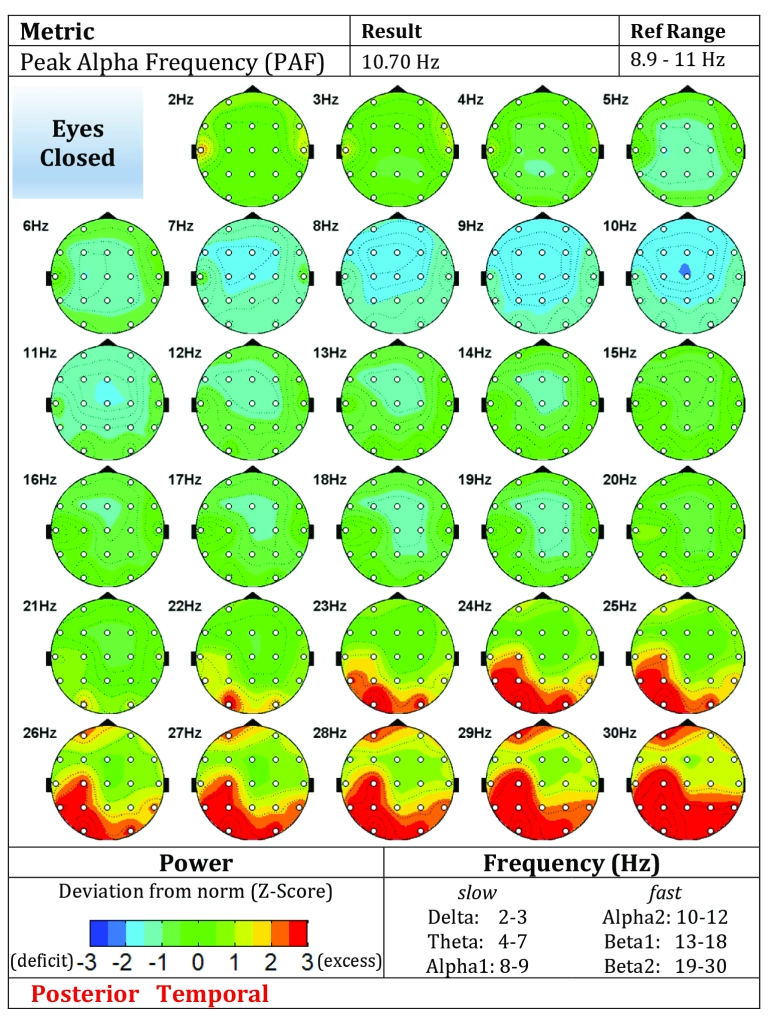
Scan 1 for NSW EOD Operator-Baseline Pre TRP
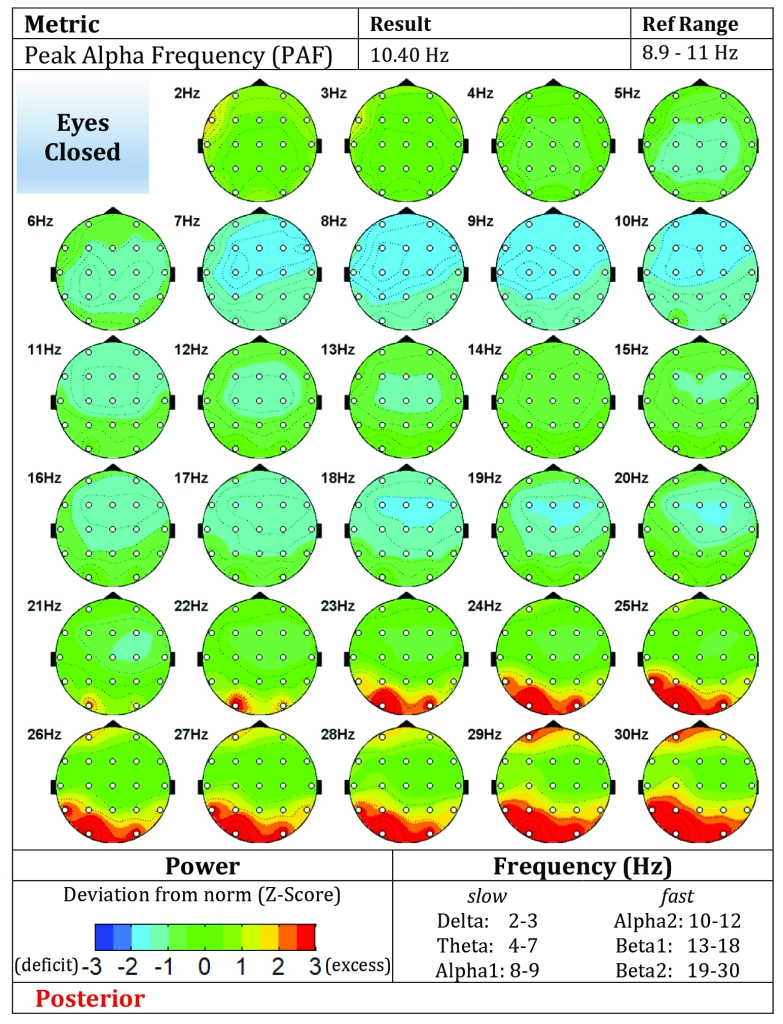
NSW EOD Operator Scan 2 with two sessions of TRP
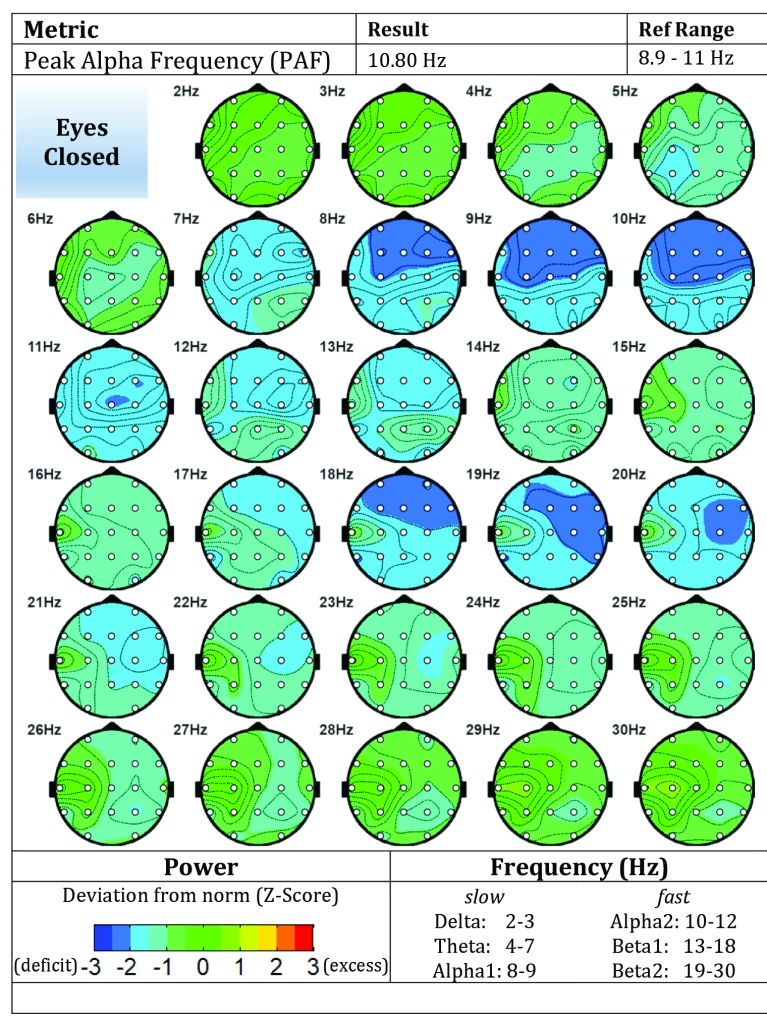
NSW EOD Operator Scan 3 after three sessions of TRP – 10/20/2025
Article by: Dan Jarvis | Founder of TRUSA, 22ZERO and Healing the Hero.