How Trauma Affects the Nervous System | Healing the Hero
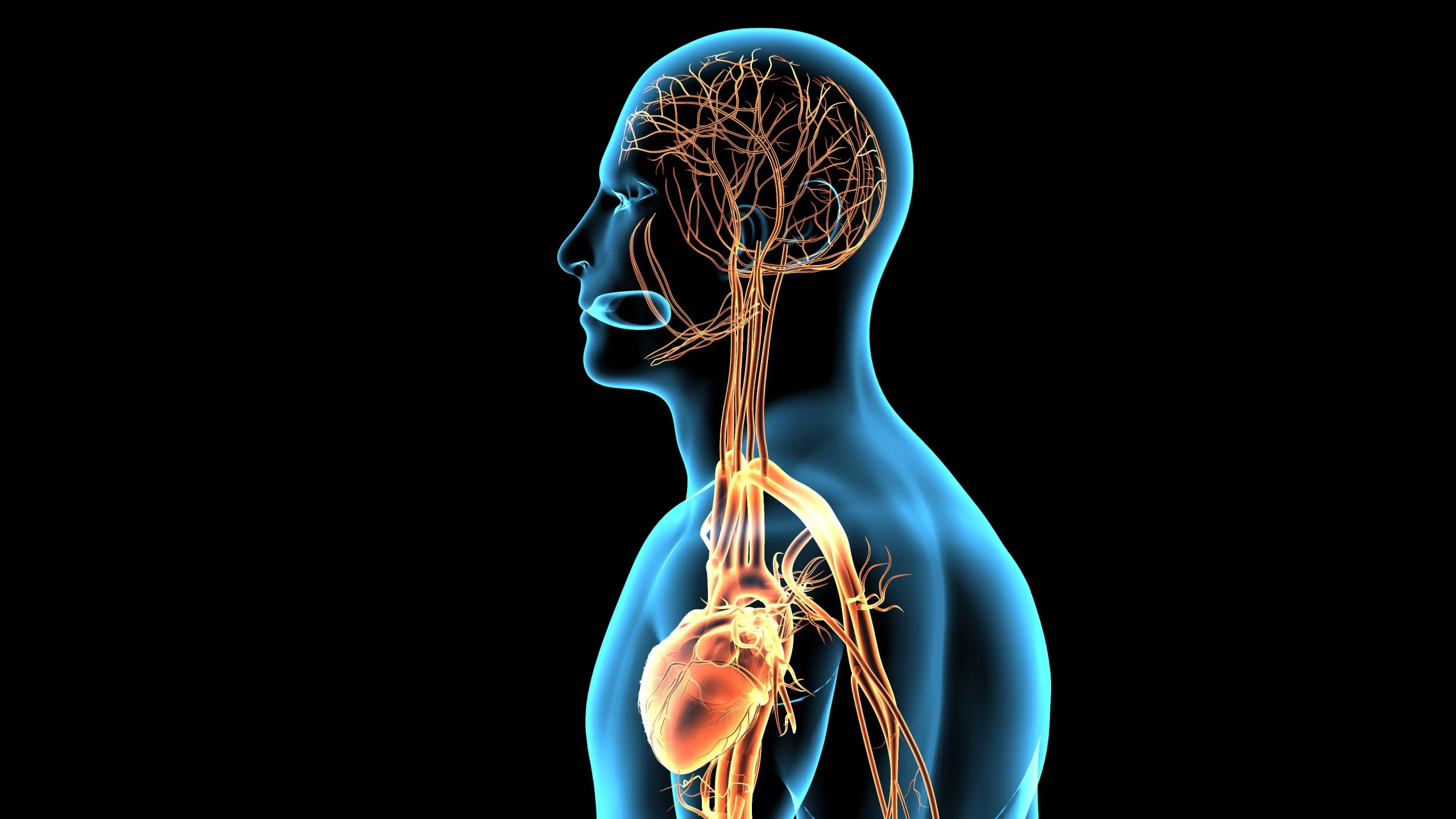
Trauma affects the nervous system in powerful ways that can keep people trapped in fight-or-flight. Learn how emotional trauma rewires the brain and how peer-based recovery approaches like TRP-PR can reset the nervous system.
Target Keywords
Primary Keywords
- trauma nervous system
- how trauma affects the nervous system
- nervous system dysregulation trauma
Secondary Keywords
- fight or flight PTSD
- hypervigilance trauma
- emotional triggers PTSD
- trauma recovery veterans
- first responder PTSD recovery
Table of Contents
Introduction
Millions of people struggle with trauma symptoms without realizing what is happening inside their bodies. Veterans, police officers, firefighters, paramedics, and civilians alike often describe the same experience: racing thoughts, poor sleep, irritability, emotional numbness, and sudden emotional reactions that seem to come out of nowhere.
These symptoms are often misunderstood as psychological weakness or mental illness. In reality, they are most often the result of a nervous system that has been stuck in survival mode.
Trauma does not only affect memories. It affects the entire nervous system. When a traumatic event occurs, the brain and body shift into a powerful survival response designed to protect life. For many people, this response eventually settles. But for others, the nervous system becomes trapped in a state of heightened alertness.
Understanding how trauma affects the nervous system is one of the most important steps toward healing.
The Human Survival System
The human nervous system evolved to protect us from danger. When the brain detects a threat, it activates what is commonly known as the fight-or-flight response.
This process is controlled by the autonomic nervous system, which consists of two primary branches:
The Sympathetic Nervous System
This system activates during stress and danger. It releases adrenaline and cortisol, increases heart rate, sharpens attention, and prepares the body to fight or escape.
The Parasympathetic Nervous System
This system restores calm and balance after the threat passes. It slows the heart rate, supports digestion, and promotes sleep and recovery.
Under normal circumstances, the body moves smoothly between these two states. After a stressful event, the nervous system returns to equilibrium.
However, trauma can disrupt this balance.
What Happens in the Brain During Trauma
Traumatic events activate several key brain structures involved in survival and memory.
The Amygdala
The amygdala acts as the brain’s threat detection system. When danger is perceived, the amygdala sends signals that activate the fight-or-flight response.
In trauma survivors, the amygdala can become hypersensitive. Even minor cues that resemble past danger may trigger a strong emotional response.
The Hippocampus
The hippocampus is responsible for organizing memories and placing them in context. Trauma can disrupt this process, causing memories to remain fragmented and emotionally charged.
The Prefrontal Cortex
The prefrontal cortex is responsible for reasoning, judgment, and emotional regulation. During extreme stress, this region temporarily shuts down so the brain can focus on survival.
When trauma becomes chronic, communication between these regions can become dysregulated.
The Hormonal Stress Response
Trauma also activates powerful chemical responses in the body.
The hypothalamic-pituitary-adrenal (HPA) axis releases stress hormones including:
- Cortisol
- Adrenaline
- Norepinephrine
These hormones prepare the body for immediate survival.
Short-term activation of these systems is healthy and adaptive. However, chronic activation can lead to significant problems.
Common long-term effects include:
- sleep disruption
- chronic anxiety
- irritability
- emotional numbing
- concentration problems
- hypervigilance
For many trauma survivors, the nervous system begins to behave as if danger is constantly present.
Why Trauma Gets “Stuck”
A key feature of trauma is that the nervous system sometimes fails to complete the natural recovery cycle.
Several factors contribute to this:
Emotional Memory Encoding
Trauma memories are often stored with intense emotional and sensory components. These memories can be reactivated by triggers that resemble the original event.
Survival Conditioning
Repeated exposure to danger, such as combat or emergency response work, can train the nervous system to remain on high alert.
Lack of Emotional Processing
Many people suppress traumatic experiences in order to continue functioning in demanding roles. Unfortunately, unresolved emotional experiences may remain active in the nervous system.
Over time, these factors can create a persistent state of nervous system dysregulation.
Hypervigilance and Trauma
One of the most common trauma responses is hypervigilance.
Hypervigilance refers to a state in which the brain is constantly scanning for threats. Individuals experiencing hypervigilance may feel unable to relax even in safe environments.
Common signs include:
- exaggerated startle response
- difficulty sleeping
- irritability
- emotional reactivity
- constant awareness of surroundings
For veterans and first responders, hypervigilance is often reinforced by years of operating in high-risk environments.
While these adaptations can be life-saving during dangerous missions, they can become debilitating in civilian life.
Emotional Triggers and Trauma
Trauma survivors often experience sudden emotional reactions to triggers that resemble past events.
Triggers can include:
- sounds
- smells
- locations
- facial expressions
- specific phrases
- emotional conflict
When triggered, the nervous system may react as though the original danger has returned.
This can lead to experiences such as:
- flashbacks
- panic responses
- emotional flooding
- anger outbursts
- dissociation
These reactions are not signs of weakness. They are signs that the nervous system is attempting to protect the individual from perceived threat.
Trauma in Veterans and First Responders
Certain professions expose individuals to repeated traumatic experiences.
These populations include:
- military service members
- law enforcement officers
- firefighters
- paramedics
- emergency medical personnel
Repeated exposure to critical incidents can accumulate over time, creating what researchers refer to as cumulative stress injury.
Without proper processing and recovery mechanisms, the nervous system may remain in a chronic state of activation.
Resetting the Nervous System
The encouraging reality is that the nervous system is capable of healing.
Modern neuroscience demonstrates that the brain possesses significant neuroplasticity, meaning it can reorganize and adapt throughout life.
Effective trauma recovery approaches often involve helping the nervous system safely process emotional memories and return to a regulated state.
Methods that have shown promise include:
- peer-support models using Trauma Resiliency Protocol-Peer Rescue https://tacticalresiliencyusa.com/stress-relief-and-first-responders/
- somatic processing approaches
- neurofeedback training https://getversus.com/versus-works
- trauma-focused interventions
One emerging approach involves peer-led emotional processing protocols designed to help individuals neutralize emotional triggers and restore nervous system balance.
The Role of Peer Support
Peer support has long been recognized as a powerful tool in trauma recovery.
Individuals who share similar experiences often develop deep levels of trust and understanding. This shared context can allow difficult experiences to be discussed and processed more openly.
Peer-based recovery models are now widely used in military and first responder communities.
When structured effectively, peer support programs can help individuals:
- process traumatic experiences
- normalize emotional responses
- rebuild social connection
- restore emotional resilience
Trauma Recovery Is Possible
For many people living with trauma symptoms, the most damaging belief is the idea that they are permanently broken.
Research increasingly demonstrates that trauma symptoms are physiological responses to overwhelming stress, not character flaws.
With appropriate support and effective recovery methods, many individuals experience significant improvements in emotional regulation, sleep, relationships, and overall well-being.
Healing is possible because the nervous system is capable of change.
Understanding how trauma affects the nervous system allows individuals to move beyond stigma and toward real recovery.
Conclusion
Trauma is not simply a psychological issue. It is a biological survival response that affects the entire nervous system.
When trauma occurs, the brain and body work together to protect life. However, when these responses remain active long after danger has passed, individuals may experience chronic stress symptoms that affect nearly every area of life.
By understanding the underlying mechanisms of trauma and supporting recovery through compassionate and effective approaches, it is possible to restore balance to the nervous system.
For veterans, first responders, and civilians alike, trauma recovery begins with understanding that healing is not only possible—it is achievable.
Healing the Hero https://healingthehero.org Press the blue heal here button on the home page to start your healing journey. There are no costs for veterans, military, first responders, corrections officers, gold star families and all their immediate families.
Tactical Resiliency USA owns the intellectual property of the Trauma Resiliency Protocol-Peer Rescue
https://tacticalresiliencyusa.com

Article by: Dan Jarvis | Founder of TRUSA, 22ZERO and Healing the Hero.