
Table of Contents
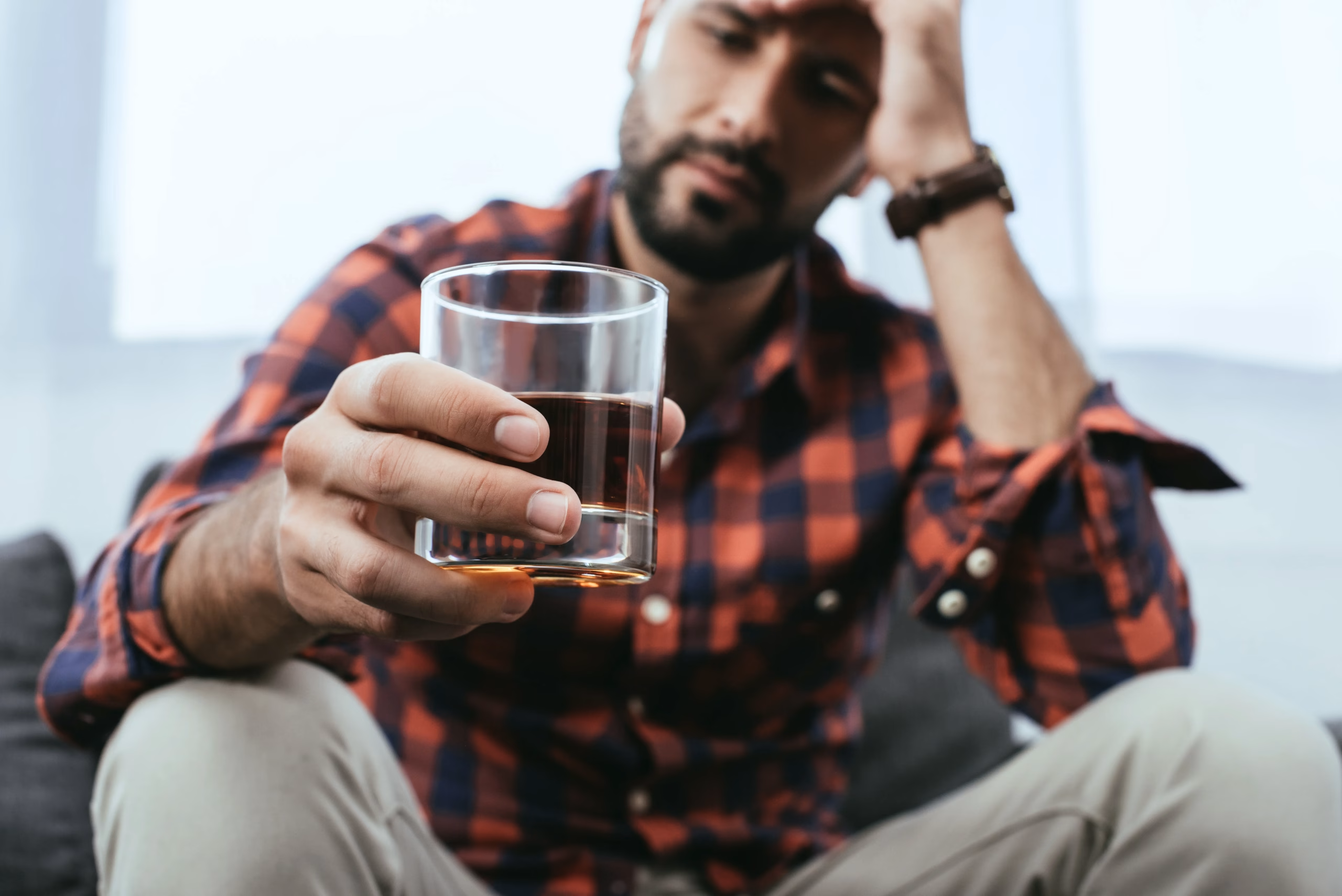
Alcohol isn’t just a “social drink.” It’s pharmacology. It changes neurochemistry, memory, emotional regulation, sleep architecture, and long-term stress systems. For trauma survivors—combat veterans, first responders, survivors of abuse—alcohol becomes a fast, legal, accessible form of dissociation.
This article explains how alcohol affects the brain, why trauma survivors disproportionately use it to cope, and what can be done—through evidence-based brain interventions—to correct the underlying mechanism instead of numbing the symptom.
Alcohol is a central nervous system depressant—this matters
Ethanol acts primarily on GABA and glutamate, two of the major balancing neurotransmitters of the brain. GABA inhibits; glutamate excites. Alcohol binds to GABA-A receptors (similar to benzodiazepines), increasing inhibition and creating the sense of “relief” or numbing (Koob & Volkow, 2016). At the same time, alcohol inhibits NMDA glutamate receptors, which suppresses brain activity.
This “two-pedal” dual action is why alcohol temporarily feels like anxiety goes down.
It literally suppresses the neural circuits generating threat signals.
However, the brain—biology always seeks equilibrium—attempts to adapt.
With repeated drinking, the brain down-regulates GABA and up-regulates glutamate to compensate (Koob, 2021). When alcohol wears off, the brain is left with less inhibition and more excitation. That is why:
- Alcohol withdrawal produces panic
- Hangovers produce anxiety spikes, think “hangziety”
- A “functional alcoholic” feels worse without drinking
This is not moral weakness. This is neuroadaptation.
Alcohol rewires reward pathways
The mesolimbic dopamine system—especially the nucleus accumbens and ventral tegmental area—is part of the “reward prediction error” pathway. Alcohol spikes dopamine, giving the illusion of enhanced mood (Gilpin & Koob, 2008).
After chronic exposure, baseline dopamine drops.
So the person doesn’t drink to “feel good.”
They drink to feel normal.
This is the same neurocircuit architecture involved in cocaine, nicotine, methamphetamine, pornography, and compulsive gambling: hijacked dopamine = hijacked motivation.
Trauma survivors use alcohol differently
Population studies show trauma survivors and veterans are significantly more likely to use alcohol as a coping mechanism (Jacobsen et al., 2001; Berenz & Coffey, 2012). The term for this is “self-medication hypothesis.” The alcohol is not used primarily for pleasure—it’s used for dissociation and emotional regulation.
Research in PTSD patients shows hyperactivation of the amygdala and reduced top-down control from the medial prefrontal cortex (Rauch et al., 2006). Alcohol temporarily lowers amygdala threat output. Trauma brains are not addicted to “fun”—they are addicted to relief.
Alcohol becomes anesthesia for:
- intrusive memories
- shame
- guilt
- moral injury
- hypervigilance
But this relief is chemically counterfeit.
It is not resolution—only sedation.
Alcohol destroys sleep—the #1 neurological recovery system
People think alcohol “helps them sleep.” It does not.
Alcohol blocks REM sleep (Roehrs & Roth, 2001). REM is where emotional memory reprocessing occurs. The brain needs REM to integrate trauma, encode learning, and clear the amygdala. Without REM, trauma remains “unfinished.”
This is why many trauma survivors experience nightmares after stopping drinking — REM rebounds aggressively.
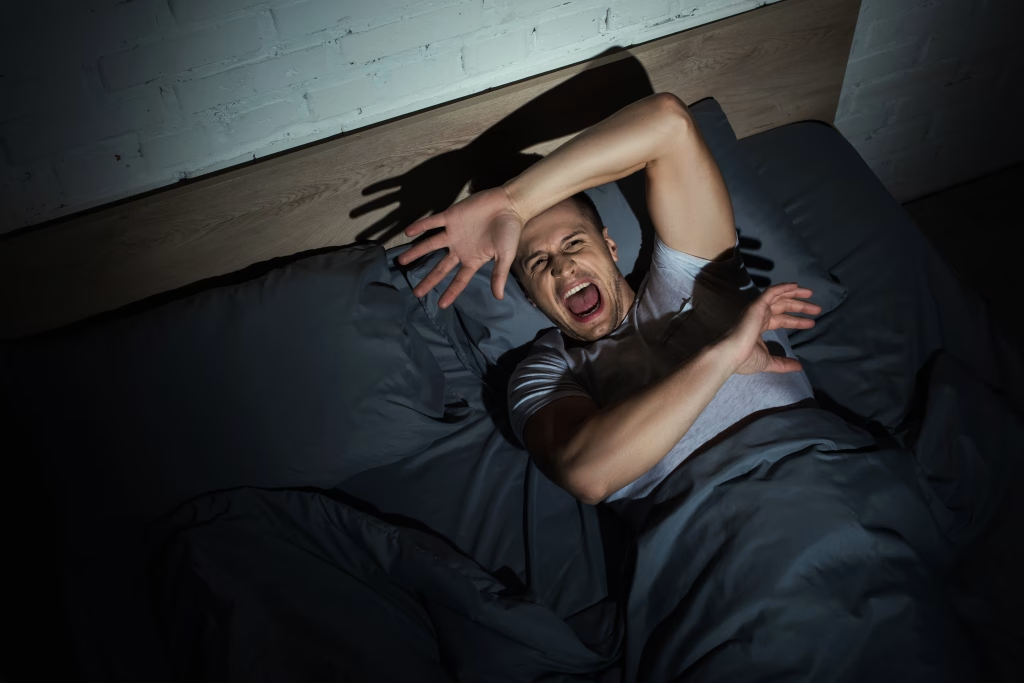
So the individual concludes: “I sleep better when I drink.”
Incorrect.
They simply avoid REM.
Trauma must have REM to heal.
Alcohol blocks REM → trauma persists → person drinks again. That is a vicious neurophysiological loop.
Alcohol literally shrinks brain tissue
MRI studies show alcohol reduces volume in:
- hippocampus (memory consolidation)
- prefrontal cortex (decision making)
- cerebellum (coordination and cognitive speed)
(Topiwala et al., 2017).
The hippocampus matters especially for trauma.
A smaller hippocampus correlates with greater PTSD severity (Gilbertson et al., 2002).
So trauma → drinking → hippocampal shrinkage → more PTSD.
Alcohol takes the very organ needed for healing trauma—and it damages it.
Why people with trauma think alcohol “works”
Trauma creates:
- hyperarousal
- anticipatory anxiety
- intrusive memory replay
- cortisol dysregulation
Alcohol artificially suppresses these systems rapidly. Compared to pharmaceuticals—weeks for SSRIs, months for therapy—alcohol provides relief in minutes.
This creates a dangerous reinforcement schedule.
And the brain learns it fast.
Very few activities on Earth change emotional state as quickly and reliably as ethanol.
What to do to correct the problem
There are two tasks—not one:
- Stop using alcohol as an emotional regulation tool
- Heal the trauma that was being numbed
If you only remove alcohol, you remove the coping mechanism—but not the cause—so relapse is very likely.
The data on trauma + substance use shows that trauma-focused care drastically improves sobriety outcomes (Back et al., 2014).
There are several evidence-based categories of intervention:
1) Trauma memory reconsolidation therapies
These are “root cause repair” approaches—not symptom coping. These work because they alter the emotional valuation of memory networks.
This includes:
- Trauma Resiliency Protocol (TRP-PR) https:TacticalResiliencyUSA.com
- Reconsolidation of Traumatic Memories-Protocol (RTM) https://thertmprotocol.com/
- Accelerated Resolution Therapy (ART) https://acceleratedresolutiontherapy.com/
These approaches aim to neutralize the charge on the trauma memory so the person no longer needs to numb it.
When the memory no longer hurts—alcohol loses its purpose.
2) Sleep restoration
Fixing sleep is one of the fastest ways to reduce craving.
Interventions that help:
- light exposure in the morning
- caffeine cutoff before noon
- consistent sleep schedule
- cognitive offloading
- magnesium glycinate in evening (evidence-supported for mild anxiety reduction)
If REM returns, emotional processing returns.
3) Social connection
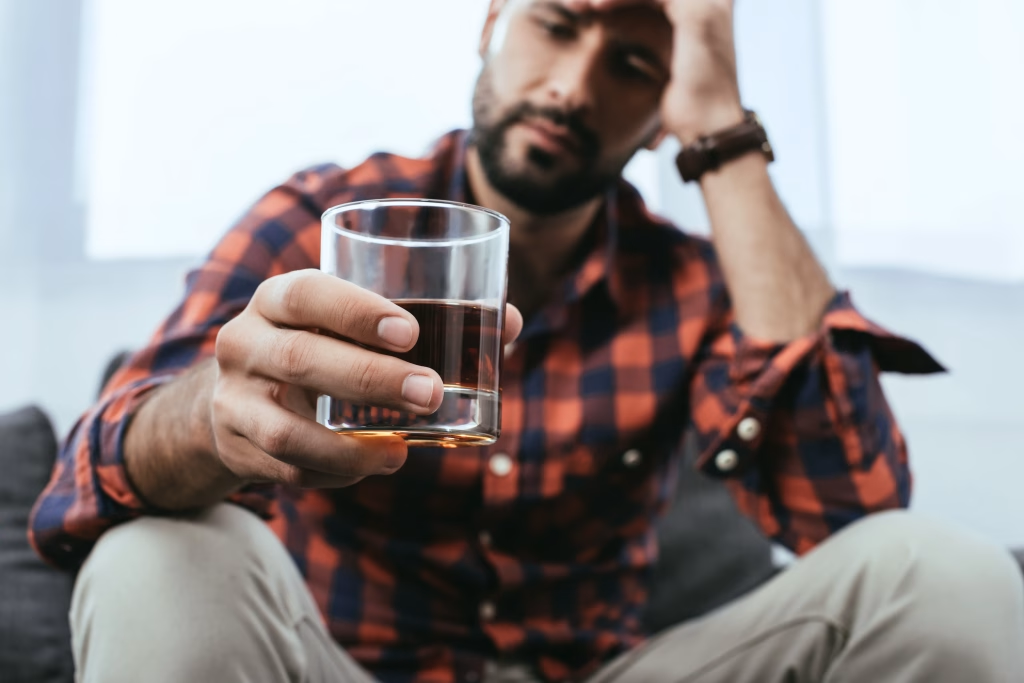
Isolation is fuel for addiction.
Veterans and first responders often lose tribe post-service. Rebuilding community—especially group identity—reduces alcohol use more effectively than simply increasing willpower.
Humans regulate emotion socially.
Isolation dysregulates the limbic system.
4) Brain-body regulation
Breathwork, heart-rate variability training, aerobic intervals—all help lower sympathetic arousal without chemicals. These are not “soft skills.” They are neurological steering wheels.
Final Thoughts
Alcohol is not a moral failure.
It is a neurobiological workaround.
Trauma makes the brain feel unsafe. Alcohol temporarily makes it feel safe. But the brain learns to rely on that synthetic “safety”—and eventually becomes unable to feel okay without it.
The real solution isn’t just taking the alcohol away.
The real solution is removing the pain the alcohol is suppressing.
Heal the memory.
Heal the nervous system.
The behavior will change itself.
Veterans, First Responders, Gold Star Families can heal at no cost to them with TRP-PR click on this link- https://healingthehero.org/heal-here/
References (APA 7)
Back, S. E., Killeen, T., Badour, C. L., Flanagan, J. C., Allan, N. P., Ana, E. S., & Brady, K. T. (2014). Concurrent treatment of substance use disorders and PTSD using prolonged exposure: A randomized clinical trial. JAMA, 316(3), 270–277.
Berenz, E. C., & Coffey, S. F. (2012). Treatment of co-occurring posttraumatic stress disorder and substance use disorders. Current Psychiatry Reports, 14, 469–477.
Gilbertson, M. W., et al. (2002). Smaller hippocampal volume predicts pathologic vulnerability to psychological trauma. Nature Neuroscience, 5, 1242–1247.
Gilpin, N. W., & Koob, G. F. (2008). Neurobiology of alcohol dependence: Focus on motivational mechanisms. Alcohol Research & Health, 31(3), 185–195.
Jacobsen, L. K., Southwick, S. M., & Kosten, T. R. (2001). Substance use disorders in patients with posttraumatic stress disorder: A review of the literature. American Journal of Psychiatry, 158(8), 1184–1190.
Koob, G. F. (2021). Neurobiology of addiction: A neurocircuitry analysis. The Lancet Psychiatry, 8(4), 317–329.
Koob, G. F., & Volkow, N. D. (2016). Neurobiology of addiction: A neurocircuitry analysis. The Lancet, 3(8), 760–773.
Rauch, S. L., Shin, L. M., & Phelps, E. A. (2006). Neurocircuitry models of posttraumatic stress disorder and extinction. Biological Psychiatry, 60(4), 376–382.
Roehrs, T., & Roth, T. (2001). Sleep, sleepiness, and alcohol use. Alcohol Research & Health, 25(2), 101–109.
Drinking alone
Article by: Dan Jarvis | Founder of TRUSA, 22ZERO and Healing the Hero.