

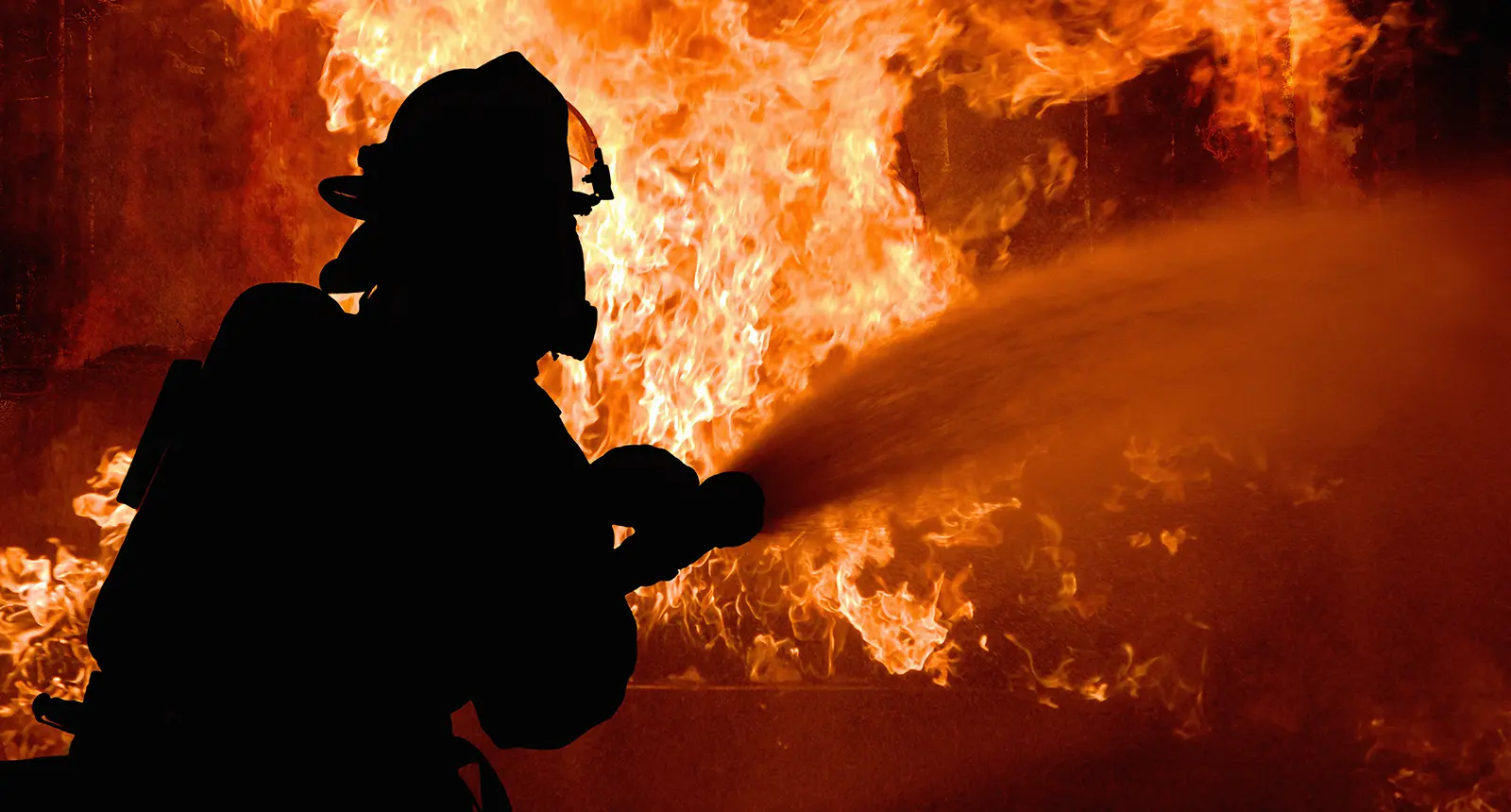
Firefighters and Fire Investigators in the United States face significant health risks built into the job: life-threatening situations, intense physical exertion, disrupted sleep, and repeated contact with the toxic byproducts of combustion.
Psychological stress and chemical exposure affect more than a firefighter’s immediate safety. Both have lasting effects on physical and mental well-being. Research links the fire service to elevated risks of sudden cardiac events, certain cancers, sleep disorders, and post-traumatic stress. That makes health monitoring and protective measures a priority for every fire service agency. This article looks at what the research shows about stress and chemical exposure in U.S. firefighters, where agencies should focus, and practical ways to reduce risk.
Table of Contents
- Stress in Fire Services
- Chemical Exposure Risks
- Stress and Chemical Exposure Together
- Common Health Impacts on Firefighters and Fire Investigators
- Preventive Measures and Recommendations for Agencies
- Conclusion
1. Stress in Fire Services
Sources of Stress
Firefighters and Fire Investigators face both acute and chronic stress from many sources: life-threatening situations, high-stakes decisions, long shifts, and interrupted sleep. Calls are unpredictable, and crews carry responsibility for the safety of their teammates and the public. Over a career, firefighters also see badly injured people, deceased children, and people in severe distress. In interviews with firefighters and administrators from across the United States, Jahnke et al. (2016) found that repeated exposure to these traumatic events takes a cumulative psychological toll, including desensitization, flashbacks, and irritability.
That toll can become a diagnosable condition. A systematic review of 28 studies covering more than 20,000 rescue workers worldwide estimated a pooled current PTSD prevalence of about 10%, much higher than in the general population (Berger et al., 2012). In a U.S. survey of more than 1,000 current and retired firefighters, Stanley et al. (2015) found high career rates of suicidal thoughts and behaviors.
Sleep disruption is another major contributor. Shift schedules and overnight calls break up sleep. In a national sample of nearly 7,000 firefighters from 66 U.S. departments, 37% screened positive for at least one sleep disorder, most often obstructive sleep apnea. Firefighters who screened positive were more likely to report motor vehicle crashes, cardiovascular disease, diabetes, depression, and anxiety (Barger et al., 2015). Excessive daytime sleepiness has also been documented in firefighters in the central United States (Haddock et al., 2013).
Healing the Hero
Healing the Hero is a U.S.-based nonprofit that specializes in mitigating the stress of critical incidents through the Trauma Resiliency Protocol (TRP), developed by Dan Jarvis. TRP is a no-cost, non-clinical intervention that removes the emotion from traumatic triggers, allowing the brain to cognitively reprocess the memory for healthier outcomes (Jarvis, 2020). https://healingthehero.org
A term coined by Donald Brucker, a Healing the Hero board member, really makes sense: we should look at the need for a Mental Decon (decontamination) after critical incidents. Donald has served in the fire service for over 30 years and is leading the charge to crush the stigma in his field.
Health Impacts of Stress
The demands of firefighting can show up in the heart. Heart disease causes about 45% of on-duty deaths among U.S. firefighters (Kales et al., 2007). Kales and colleagues found that the risk of death from coronary heart disease during fire suppression was roughly 10 to 100 times higher than during non-emergency duties. Responding to and returning from alarms also carried elevated risk. Researchers attribute these events to the combination of heavy physical exertion, heat, adrenaline surges, and smoke exposure acting on firefighters who often have underlying cardiovascular disease (Kales & Smith, 2017; Smith et al., 2016).
2. Chemical Exposure Risks
Types of Chemicals and Carcinogens
Firefighters and Fire Investigators are also exposed to chemicals released during combustion, including polycyclic aromatic hydrocarbons (PAHs), benzene, and other volatile organic compounds (VOCs). Turnout gear and self-contained breathing apparatus (SCBA) are essential, but they do not stop every exposure. In controlled structure-fire studies by the National Institute for Occupational Safety and Health (NIOSH), firefighters’ bodies absorbed PAHs and benzene even when SCBA was worn throughout, which points to the skin as an exposure route (Fent et al., 2014).
Contamination also travels on gear. Fent et al. (2017) found that PAH levels on turnout gear rose after every fire response and were highest for crews assigned to fire attack and search and rescue. PAHs were also found on firefighters’ necks after fires, and VOCs off-gassed from gear after the response. Gear handled after a call can therefore keep exposing firefighters through the skin and the air they breathe.
Health Impacts of Chemical Exposure
The strongest evidence on chemical exposure concerns cancer. In 2022, the International Agency for Research on Cancer (IARC) classified occupational exposure as a firefighter as Group 1, carcinogenic to humans. It found sufficient evidence for mesothelioma and bladder cancer, and limited evidence for colon, prostate, and testicular cancers, melanoma, and non-Hodgkin lymphoma (Demers et al., 2022).
A NIOSH study of nearly 30,000 career firefighters from San Francisco, Chicago, and Philadelphia found modestly higher overall cancer incidence and cancer mortality than in the general U.S. population. The excess was driven mainly by digestive and respiratory cancers, and mesothelioma occurred at about twice the expected rate (Daniels et al., 2014). A later meta-analysis also found elevated risk for several cancer types in firefighters (Soteriades et al., 2019).
Firefighters also breathe in smoke and particulates. Effects on long-term lung health are less clear-cut than many people assume. A systematic review of long-term lung function in urban career firefighters found that smoking strongly influenced decline. The effect of routine firefighting was unclear, but firefighters with severe, non-routine exposures consistently showed accelerated decline (Slattery et al., 2018). This is one reason consistent respiratory protection, including during overhaul, matters.
3. Stress and Chemical Exposure Together
Stress and chemical exposure are usually studied separately, but they land on the same people. A single structure fire combines extreme physical strain on the heart (Smith et al., 2016) with contamination of gear and skin by combustion products (Fent et al., 2017). The same crews may also carry the effects of repeated trauma and poor sleep (Barger et al., 2015; Jahnke et al., 2016). Research has not yet established how much chronic stress changes the body’s response to chemical exposure. Even so, the burdens add up, and agencies are better served by an integrated approach to health and safety than by treating each one alone.
4. Common Health Impacts on Firefighters and Fire Investigators
Cardiovascular Disease
Sudden cardiac events are the leading cause of on-duty firefighter deaths. The highest risk comes during fire suppression and alarm response (Kales et al., 2007). Firefighting places extreme demands on the cardiovascular system, and the risk is greatest for firefighters with underlying heart disease, obesity, or poor fitness (Smith et al., 2016; Kales & Smith, 2017).
Cancer
Firefighting is now classified as a known human carcinogen (Demers et al., 2022). U.S. cohort data show higher-than-expected rates of several cancers, including mesothelioma and digestive and respiratory cancers (Daniels et al., 2014). Reducing exposure through PPE, decontamination, and early detection is central to lowering this risk.
Respiratory Effects
Smoke and particulates are a constant hazard. Long-term lung function decline in firefighters is strongly affected by smoking, and severe, non-routine exposures are linked to faster decline (Slattery et al., 2018). Not smoking and wearing respiratory protection consistently are the clearest protective steps.
Mental Health and Sleep
Rescue workers have markedly higher rates of PTSD than the general population (Berger et al., 2012). Suicidal thoughts and behaviors are a documented concern in the U.S. fire service (Stanley et al., 2015; Stanley et al., 2016). Sleep disorders are common, and they are associated with depression, anxiety, and crash risk (Barger et al., 2015). Addressing the cumulative effects of repeated trauma exposure deserves the same attention as physical safety (Jahnke et al., 2016).
5. Preventive Measures and Recommendations for Agencies
Fire service agencies can take proactive steps that address both physical and mental health:
Regular Health Monitoring
Medical evaluations that include cardiovascular risk screening can help identify firefighters at higher risk of sudden cardiac events (Smith et al., 2016). Screening for sleep disorders is also worthwhile. Sleep disorders are common in firefighters, often undiagnosed, and linked to crashes and poor health (Barger et al., 2015). Given the documented rates of PTSD and suicidal thoughts and behaviors, agencies should also consider routine mental health check-ins and clear pathways to professional care (Berger et al., 2012; Stanley et al., 2016).
Personal Protective Equipment (PPE)
PPE cannot eliminate every exposure, but it remains the first line of defense. Wear SCBA consistently, including during overhaul. Pay attention to areas such as the neck, where contamination has been measured after fires (Fent et al., 2017).
Decontamination Procedures
On-scene decontamination works. In NIOSH testing, field decontamination of turnout jackets with dish soap, water, and scrubbing reduced PAH contamination by a median of 85% (Fent et al., 2017). Agencies should supply decon equipment at the scene, encourage cleaning exposed skin promptly, and limit time spent around contaminated gear after a call.
Mental Health Support
Agencies should make sure members can easily reach qualified mental health professionals and know the warning signs of PTSD and suicide risk (Stanley et al., 2016). Treating a “Mental Decon” after critical incidents as routine helps normalize caring for the mind the same way we care for gear.
Training and Education
Education on cancer risk, decontamination, cardiovascular fitness, sleep health, and the effects of repeated trauma gives firefighters the knowledge they need to make informed decisions about their health.
Conclusion
The health impacts of stress and chemical exposure on U.S. firefighters are serious and varied. They include elevated risks of sudden cardiac death, several cancers, sleep disorders, and post-traumatic stress. Fire service agencies should prioritize health and wellness, including better PPE practices, regular health monitoring, decontamination procedures, and access to mental health resources. These steps can reduce long-term health risks and create a safer, more supportive work environment.
As the demands of firefighting grow, fire service agencies need to invest in both the physical and mental health of their members. The cumulative burden of stress and chemical exposure affects more than the individual firefighter. It affects families, departments, and the sustainability of the profession. By taking a proactive, integrated approach to health and safety, agencies can protect the people who risk their lives to protect others.
References
- Barger, L. K., Rajaratnam, S. M. W., Wang, W., O’Brien, C. S., Sullivan, J. P., Qadri, S., Lockley, S. W., & Czeisler, C. A. (2015). Common sleep disorders increase risk of motor vehicle crashes and adverse health outcomes in firefighters. Journal of Clinical Sleep Medicine, 11(3), 233–240. https://doi.org/10.5664/jcsm.4534
- Berger, W., Coutinho, E. S. F., Figueira, I., Marques-Portella, C., Luz, M. P., Neylan, T. C., Marmar, C. R., & Mendlowicz, M. V. (2012). Rescuers at risk: A systematic review and meta-regression analysis of the worldwide current prevalence and correlates of PTSD in rescue workers. Social Psychiatry and Psychiatric Epidemiology, 47(6), 1001–1011. https://doi.org/10.1007/s00127-011-0408-2
- Daniels, R. D., Kubale, T. L., Yiin, J. H., Dahm, M. M., Hales, T. R., Baris, D., Zahm, S. H., Beaumont, J. J., Waters, K. M., & Pinkerton, L. E. (2014). Mortality and cancer incidence in a pooled cohort of US firefighters from San Francisco, Chicago and Philadelphia (1950–2009). Occupational and Environmental Medicine, 71(6), 388–397. https://doi.org/10.1136/oemed-2013-101662
- Demers, P. A., DeMarini, D. M., Fent, K. W., Glass, D. C., Hansen, J., Adetona, O., et al. (2022). Carcinogenicity of occupational exposure as a firefighter. The Lancet Oncology, 23(8), 985–986. https://doi.org/10.1016/S1470-2045(22)00390-4
- Fent, K. W., Eisenberg, J., Snawder, J., Sammons, D., Pleil, J. D., Stiegel, M. A., Mueller, C., Horn, G. P., & Dalton, J. (2014). Systemic exposure to PAHs and benzene in firefighters suppressing controlled structure fires. Annals of Occupational Hygiene, 58(7), 830–845. https://doi.org/10.1093/annhyg/meu036
- Fent, K. W., Alexander, B., Roberts, J., Robertson, S., Toennis, C., Sammons, D., Bertke, S., Kerber, S., Smith, D., & Horn, G. (2017). Contamination of firefighter personal protective equipment and skin and the effectiveness of decontamination procedures. Journal of Occupational and Environmental Hygiene, 14(10), 801–814. https://doi.org/10.1080/15459624.2017.1334904
- Haddock, C. K., Poston, W. S. C., Jitnarin, N., & Jahnke, S. A. (2013). Excessive daytime sleepiness in firefighters in the central United States. Journal of Occupational and Environmental Medicine, 55(4), 416–423. https://doi.org/10.1097/JOM.0b013e31827cbb0b
- Jahnke, S. A., Poston, W. S. C., Haddock, C. K., & Murphy, B. (2016). Firefighting and mental health: Experiences of repeated exposure to trauma. Work, 53(4), 737–744. https://doi.org/10.3233/WOR-162255
- Jarvis, D. (2020). Trauma Resiliency Protocol: Helping veterans and first responders manage PTSD. Tactical Resiliency USA.
- Kales, S. N., Soteriades, E. S., Christophi, C. A., & Christiani, D. C. (2007). Emergency duties and deaths from heart disease among firefighters in the United States. New England Journal of Medicine, 356(12), 1207–1215. https://doi.org/10.1056/NEJMoa060357
- Kales, S. N., & Smith, D. L. (2017). Firefighting and the heart. Circulation, 135(14), 1296–1299. https://doi.org/10.1161/CIRCULATIONAHA.117.027018
- Slattery, F., Johnston, K., Paquet, C., Bennett, H., & Crockett, A. (2018). The long-term rate of change in lung function in urban professional firefighters: A systematic review. BMC Pulmonary Medicine, 18(1), 149. https://doi.org/10.1186/s12890-018-0711-8
- Smith, D. L., DeBlois, J. P., Kales, S. N., & Horn, G. P. (2016). Cardiovascular strain of firefighting and the risk of sudden cardiac events. Exercise and Sport Sciences Reviews, 44(3), 90–97. https://doi.org/10.1249/JES.0000000000000081
- Soteriades, E. S., Kim, J., Christophi, C. A., & Kales, S. N. (2019). Cancer incidence and mortality in firefighters: A state-of-the-art review and meta-analysis. Asian Pacific Journal of Cancer Prevention, 20(11), 3221–3231. https://doi.org/10.31557/APJCP.2019.20.11.3221
- Stanley, I. H., Hom, M. A., Hagan, C. R., & Joiner, T. E. (2015). Career prevalence and correlates of suicidal thoughts and behaviors among firefighters. Journal of Affective Disorders, 187, 163–171. https://doi.org/10.1016/j.jad.2015.08.007
- Stanley, I. H., Hom, M. A., & Joiner, T. E. (2016). A systematic review of suicidal thoughts and behaviors among police officers, firefighters, EMTs, and paramedics. Clinical Psychology Review, 44, 25–44. https://doi.org/10.1016/j.cpr.2015.12.002
Article by: Dan Jarvis | Founder of TRUSA, 22ZERO and Healing the Hero.